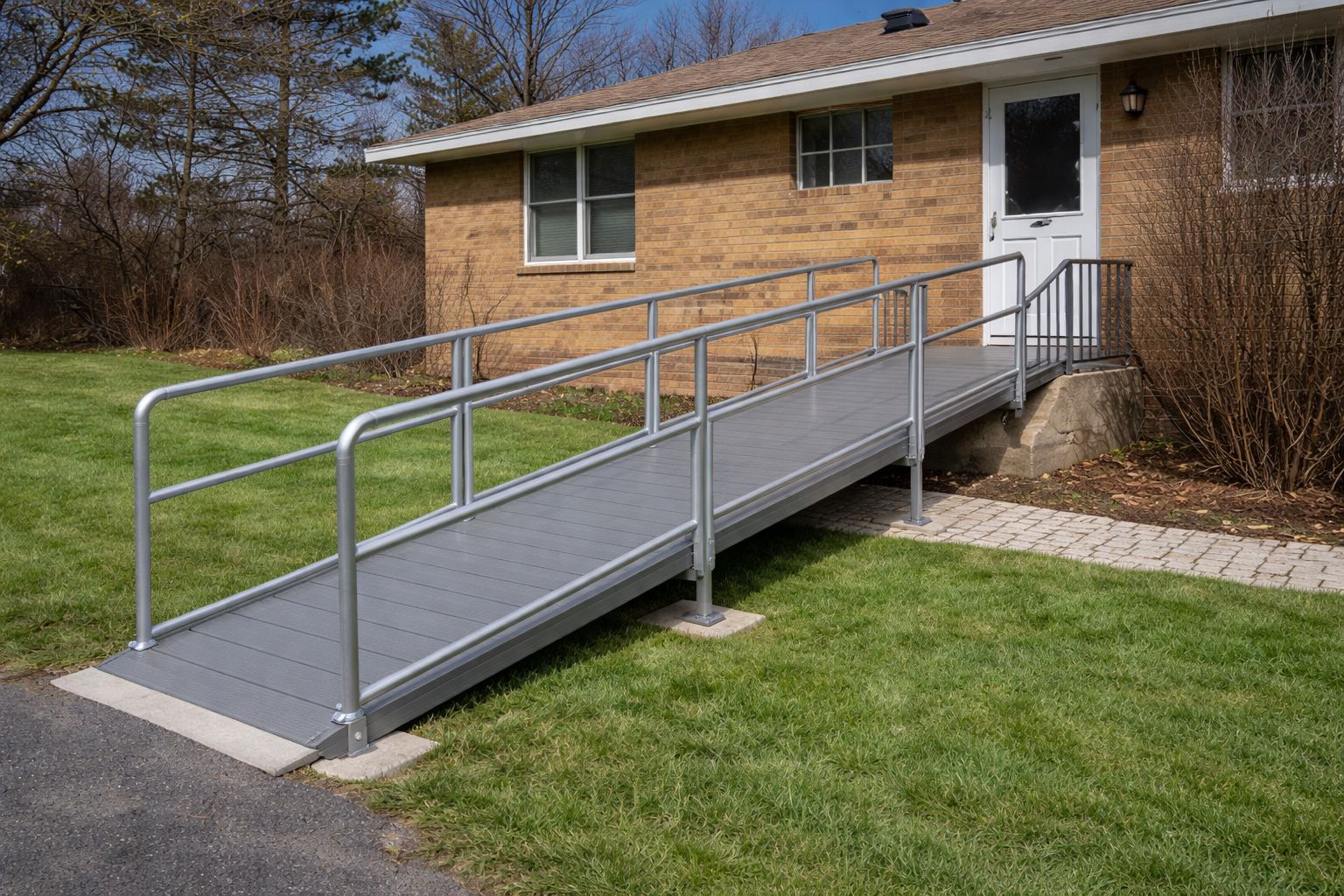
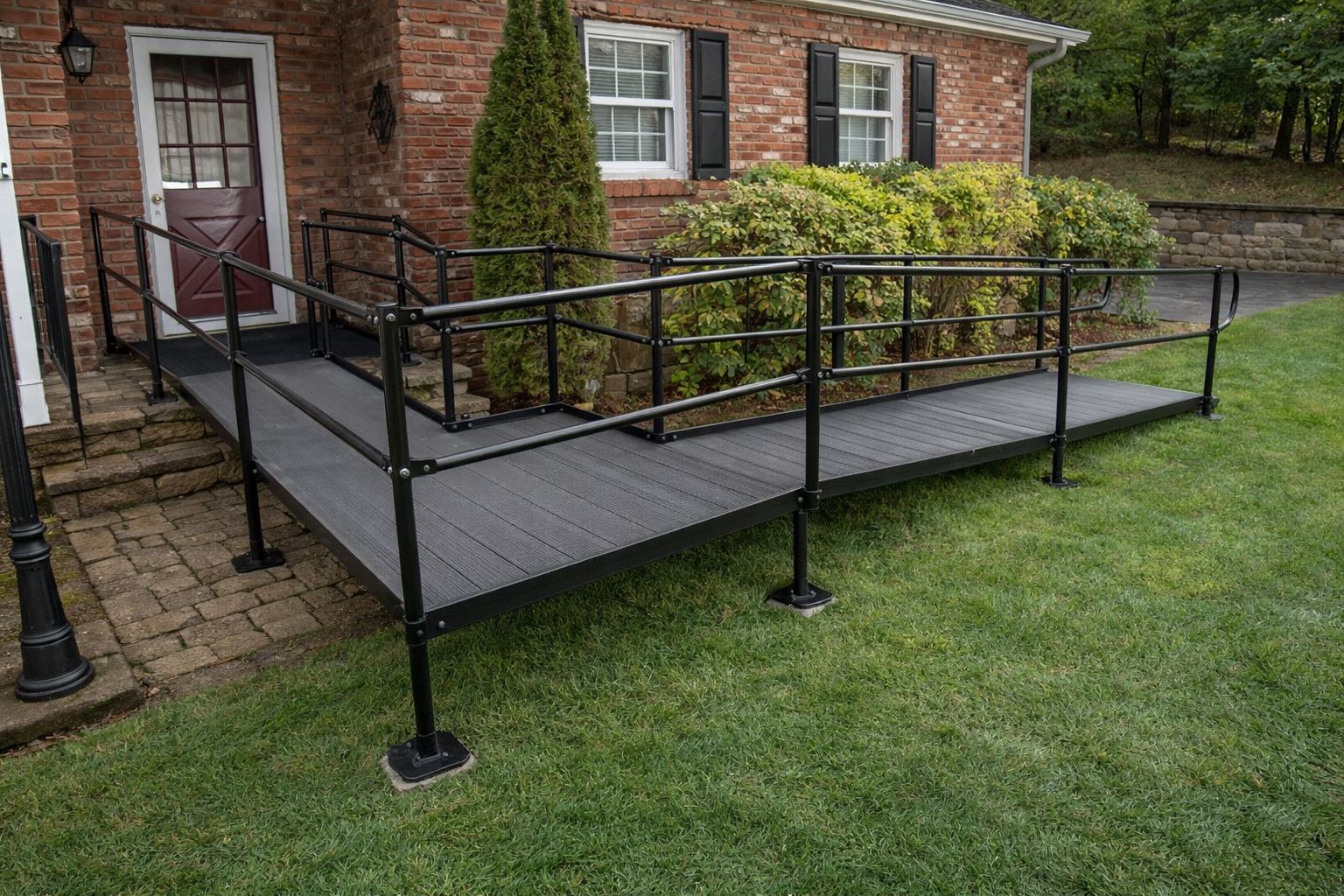
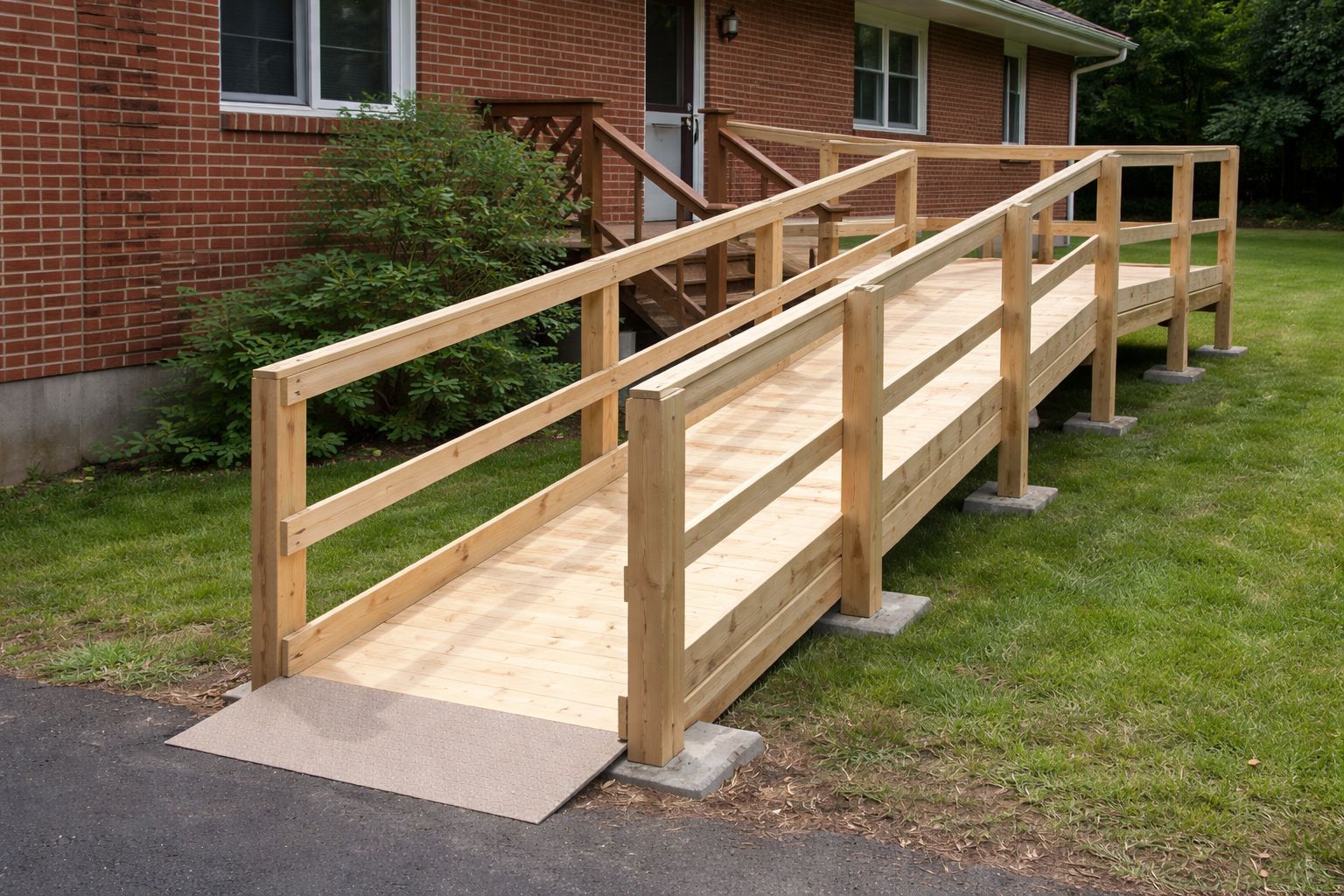
We design and build beautiful, durable access ramps for homes and businesses — giving everyone safe, independent access. Built to Canadian building codes with the same craftsmanship we bring to every deck.
Mobility shouldn't be a barrier to enjoying your home. Whether you're accommodating a family member recovering from surgery, planning ahead for aging in place, or welcoming guests with mobility challenges — a well-built access ramp makes all the difference.
At BuildMyDeck.ca, we apply the same premium craftsmanship to ramp construction as we do to our custom decks. Every ramp is engineered for the correct slope ratio, fitted with proper handrails on both sides, and built with non-slip surfaces to keep users safe in all Canadian weather conditions.
Built to National Building Code 1:12 slope ratio standards
Graspable handrails on both sides, frost-set posts
Non-slip decking surfaces rated for wet and icy conditions
Switchback and L-shaped layouts for tight spaces
Permits handled — we know local accessibility bylaws
Ramp Styles & Materials
The Right Ramp for Every Home
Every home and situation is different. We offer a range of ramp configurations and materials to find the safest, most practical, and best-looking solution for your property.
Pressure-Treated Wood Ramp
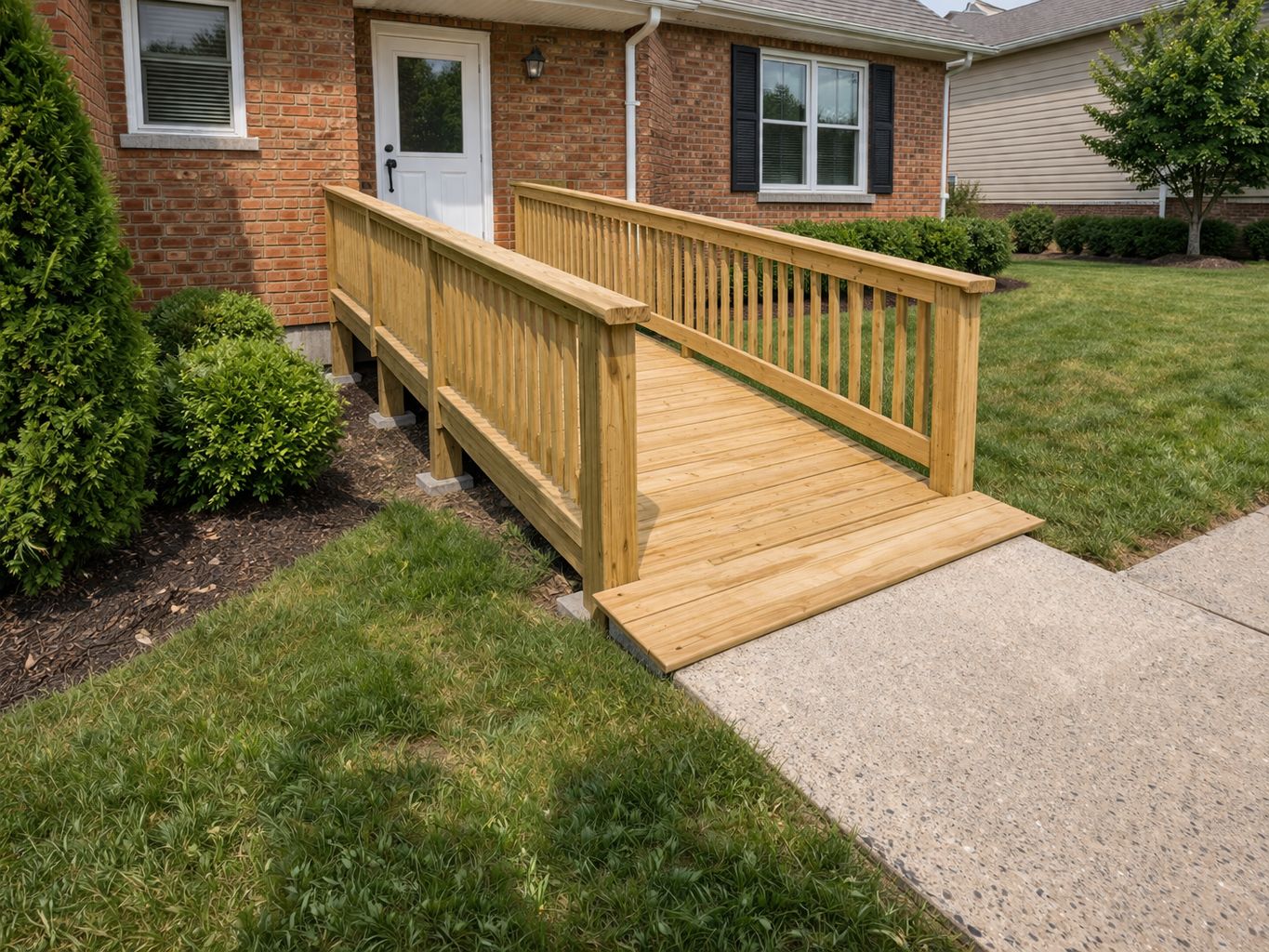
The most affordable and widely used ramp material. Pressure-treated lumber is rot-resistant, structurally sound, and can be built in almost any configuration. Finished with non-slip strips or textured paint for year-round safety. Ideal for homeowners looking for a cost-effective permanent solution.
Composite Ramp
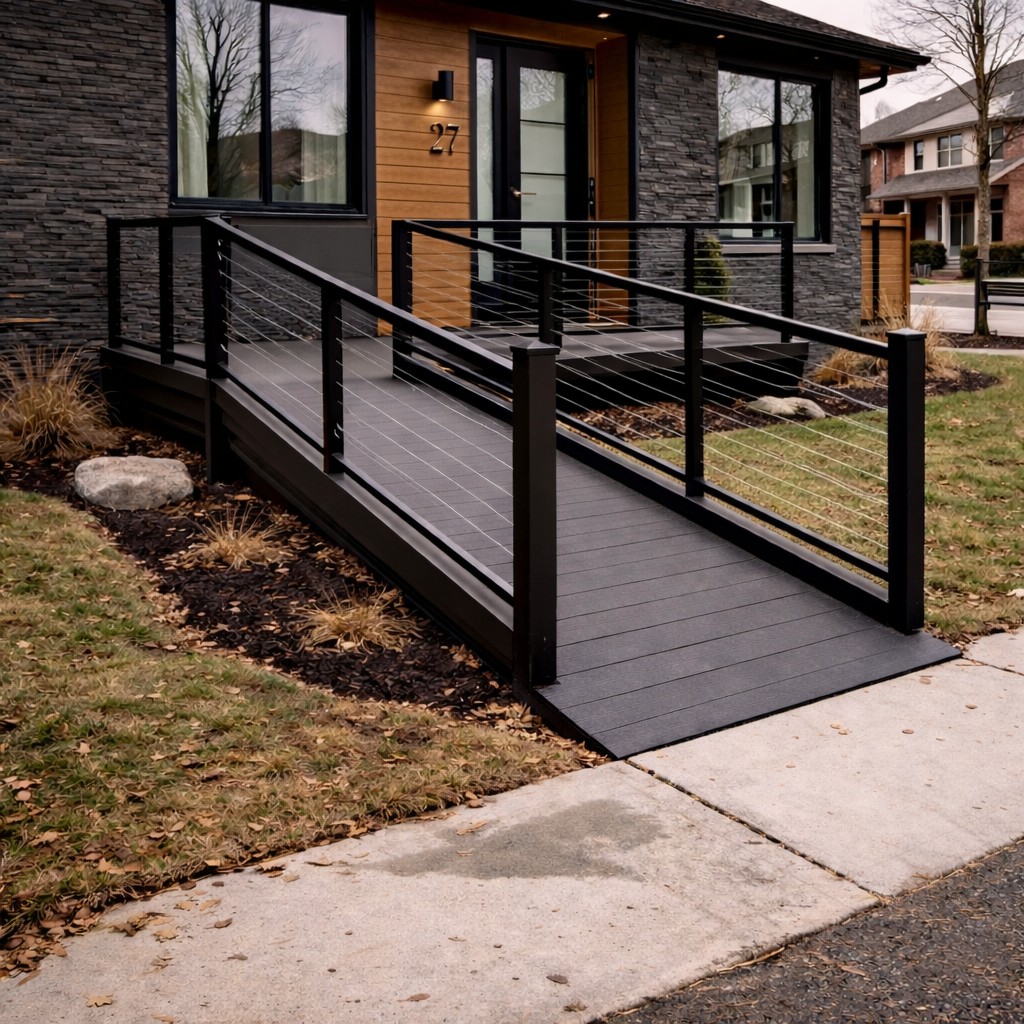
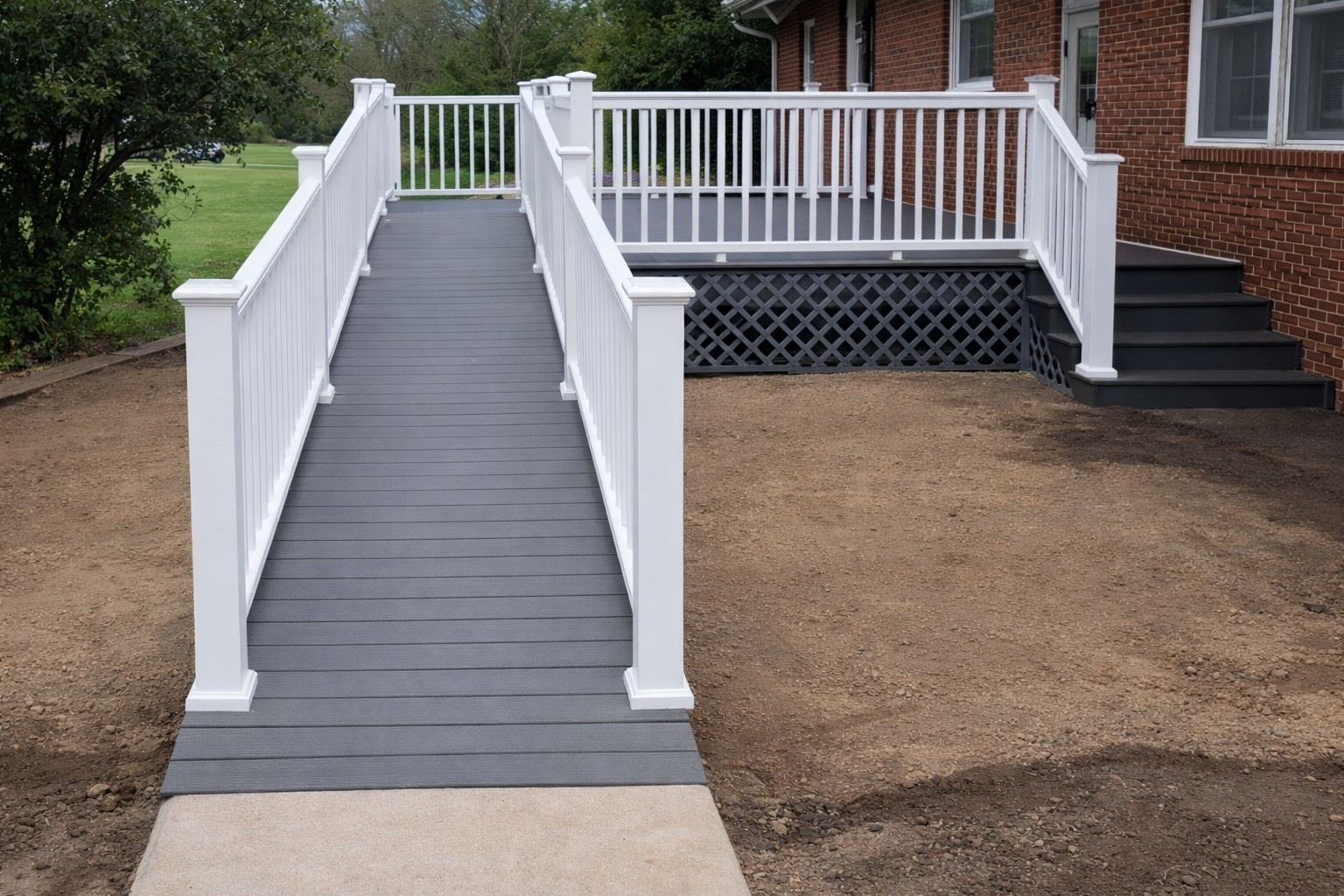
For homeowners who want a beautiful, low-maintenance ramp that matches a composite deck or complements the home's exterior. Composite ramp surfaces won't splinter, are naturally slip-resistant, and require no annual sealing or staining. Available in a wide range of colours and finishes.
Covered / Roofed Ramp
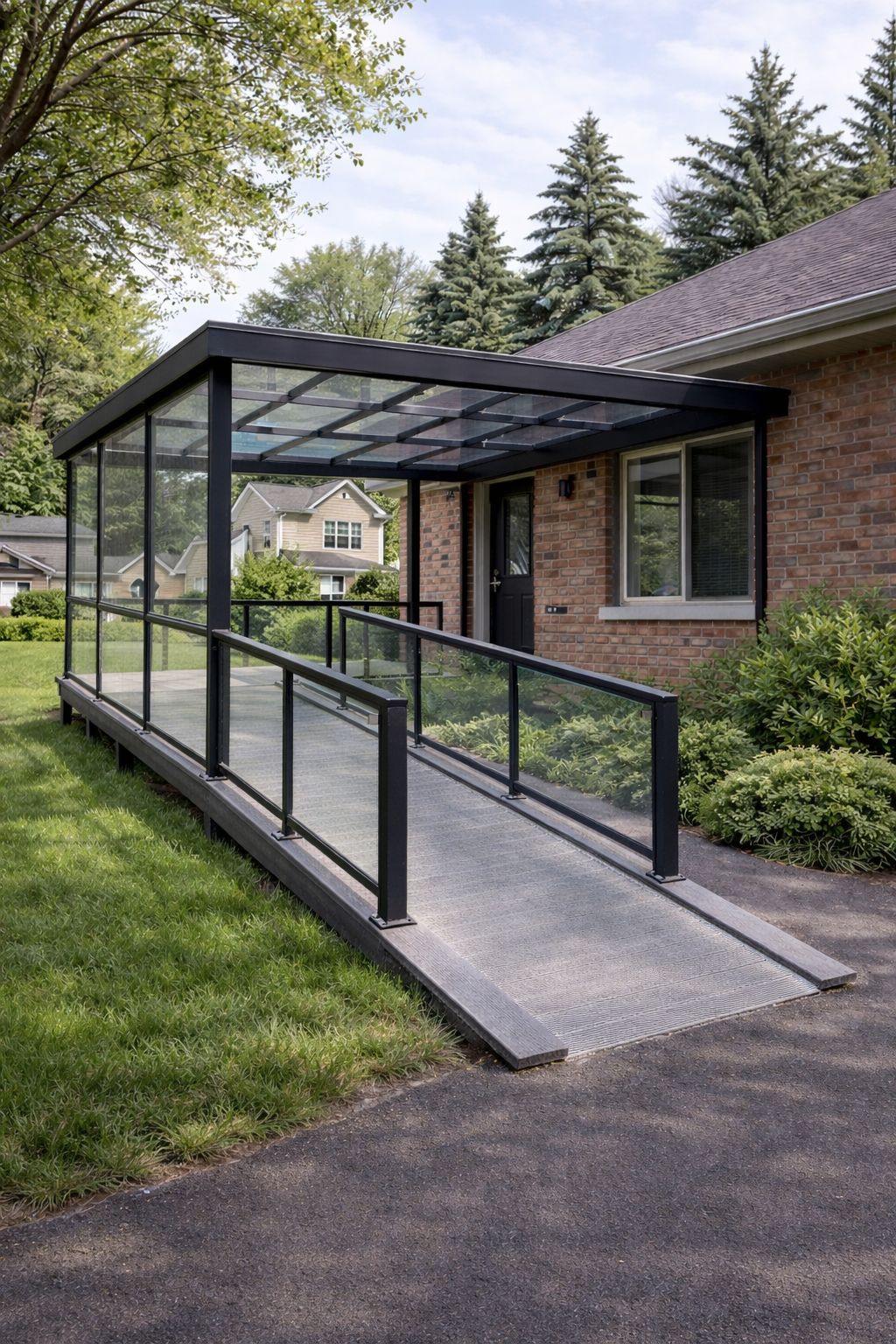
In Canada's climate, a covered ramp can be essential — preventing ice and snow accumulation on the ramp surface and keeping users dry. We integrate roofing structures directly over the ramp, matched to your home's architecture. A premium upgrade for year-round usability and safety.
Switchback / L-Shaped Ramp
When a straight run isn't possible due to space constraints or significant elevation changes, we design switchback (Z-shaped) or L-shaped ramp systems with intermediate landings. These allow the correct 1:12 slope to be achieved in a compact footprint — perfect for homes with raised entries.
Modular / Temporary Ramp
Need a ramp for a recovery period or a short-term situation? We can build or source modular ramp systems that can be assembled, disassembled, and relocated as needed. All modular ramps still meet safety standards and are inspected before use.
Cedar & Hardwood Ramp
For a ramp that looks like a natural extension of your home, cedar or hardwood ramps offer warmth, beauty, and excellent durability. Cedar is naturally rot-resistant and takes stain beautifully — ideal for homes with wood decks or cottage-style properties where aesthetics matter.
Our Standards
What Every BuildMyDeck.ca Ramp Includes
Safety is non-negotiable. Every ramp we build meets or exceeds Canadian building code requirements for accessibility.
1:12 Slope Ratio
Every ramp is designed to the National Building Code standard — a maximum 1-inch rise for every 12 inches of run. This ensures safe, manageable inclines for wheelchair users and those with limited mobility.
Dual Handrails
Graspable handrails on both sides of the ramp, set at the correct height (34–38 inches), extending 12 inches beyond the top and bottom of the ramp. Essential for user safety and required by code.
Non-Slip Surface
All ramp decking is fitted with non-slip strips, textured composite, or rubberized coating to prevent slipping in wet, icy, or snowy conditions — keeping users safe year-round in the Canadian climate.
Level Landings
Top, bottom, and intermediate landings are built a minimum of 5×5 feet to allow wheelchair users to safely rest, turn, and open doors. Landings are level (no slope) for maximum stability.
Permit Assistance
Many municipalities require permits for permanent ramp structures. We handle the permit application process, ensure compliance with local accessibility bylaws, and coordinate any required inspections.
5-Year Warranty
All ramp builds come with our standard 5-year craftsmanship warranty. We stand behind the structural integrity of every ramp we build — if anything moves, warps, or fails, we fix it.
Common Questions
Wheelchair Ramp FAQ
Ramp costs vary depending on length, material, and configuration. A basic pressure-treated ramp for a 24-inch door elevation typically ranges from $2,500–$5,000 installed. Composite ramps run $4,000–$8,000. Larger switchback systems or covered ramps can range from $6,000–$15,000+. We provide detailed free quotes based on your specific entry height and site conditions.
The National Building Code requires a maximum slope of 1:12 — meaning for every 1 inch of rise, you need 12 inches (1 foot) of ramp length. A typical home with a 24-inch doorstep elevation needs a minimum 24-foot ramp run. If space doesn't allow a straight run, we design switchback systems with landings to achieve the same safe slope in less linear space.
Permit requirements vary by municipality. Some cities exempt accessibility ramps from permit requirements; others require a building permit for any permanent structure attached to the home. We review local requirements for your property and handle all permit applications as part of our service. In most cases we can obtain permits quickly to minimize delays.
Yes — several programs may help offset ramp costs. The federal Home Accessibility Tax Credit (HATC) allows eligible homeowners to claim up to $20,000 in renovation expenses for a 15% non-refundable tax credit. Ontario residents may also qualify for the Home and Vehicle Modification Program (HVMP), which provides grants of up to $15,000 to help people with disabilities modify their homes for improved accessibility — including wheelchair ramp installation. Many other provinces and municipalities have their own accessibility grant programs as well. We recommend speaking with your accountant and checking provincial programs in your area.
The National Building Code requires a minimum clear width of 36 inches (915mm) for wheelchair ramps. We typically build ramps 42–48 inches wide to allow comfortable passage and caregiver assistance. Wider ramps also make it easier to navigate scooters and power wheelchairs.
Safe Access for Every Home
Ready to Make Your Home Fully Accessible?
Get a free, no-obligation ramp quote. We'll assess your entry height, available space, and material preferences — and design a safe, beautiful ramp solution that works for your home and budget.